Industrial Robot Certifications: A Buyer’s Compliance Checklist for Delta & SCARA Robots
When buyers source industrial robots, the most important question is often not which model has the highest speed, but which certifications are included. For Delta robots and SCARA robots used in pick-and-place, packing, sorting, and assembly, the core compliance documents are CE conformity (Machinery and EMC), ISO10218-1 safety compliance, RoHS, REACH, and, when required, a cleanroom classification. This guide answers the question from a procurement viewpoint: what certifications are needed, and how can a buyer verify that a supplier’s documentation is complete? It is written for importers, packaging line integrators, and end users in food, daily chemical, pharmaceutical, and electronics industries.
Why Missing Certifications Block Industrial Robot Procurement
Missing or mismatched certificates create several procurement risks. Without a CE Declaration of Conformity, a robot can be held at customs. Without RoHS or REACH documentation, a product may not be accepted by distributors in regulated markets. In pharmaceutical and high-end food plants, an absent cleanroom certificate can delay commissioning. Even when a supplier shows a certificate, the document may be generic, outdated, or not specific to the robot model being purchased. The core challenge for buyers is therefore not simply asking ‘are you certified?’ but checking whether the certificate matches the product and the market.
Buyers also face internal audit risk. If their company is certified under a quality management system, the supplier’s compliance documents become part of the approved vendor file. A missing file can delay project approval or trigger non-conformance findings during an internal or customer audit.
Certification Landscape for Industrial Robots
Industrial robots are treated as machinery under most regulatory frameworks. In the European Economic Area, a robot must meet the requirements of the Machinery Directive before it can be placed on the market. Because robots contain electrical parts, they must also meet electromagnetic compatibility (EMC) requirements to avoid disrupting nearby electronic equipment. In parallel, ISO10218-1 is the international safety standard for industrial robots and is used worldwide by integrators and end users to evaluate robot safety. For products sold into the EU, RoHS restricts the use of hazardous substances in electrical equipment, and REACH manages the risks of chemicals used in manufactured articles. In food and pharmaceutical applications, cleanroom classification may also be requested; ISO Class 4 is a controlled-environment classification that indicates a low level of airborne particles. Beyond product-level certificates, management system certificates for quality, environment, and occupational health and safety help suppliers demonstrate consistent process control.
Compliance expectations vary by region. North American buyers frequently ask for safety compliance evidence alongside their own regional standards, while EU buyers focus on CE marking and REACH. Since global sourcing often involves multiple destinations, a supplier with documented international certifications is easier to qualify.
What a Complete Compliance Package Looks Like: Robotphoenix Example
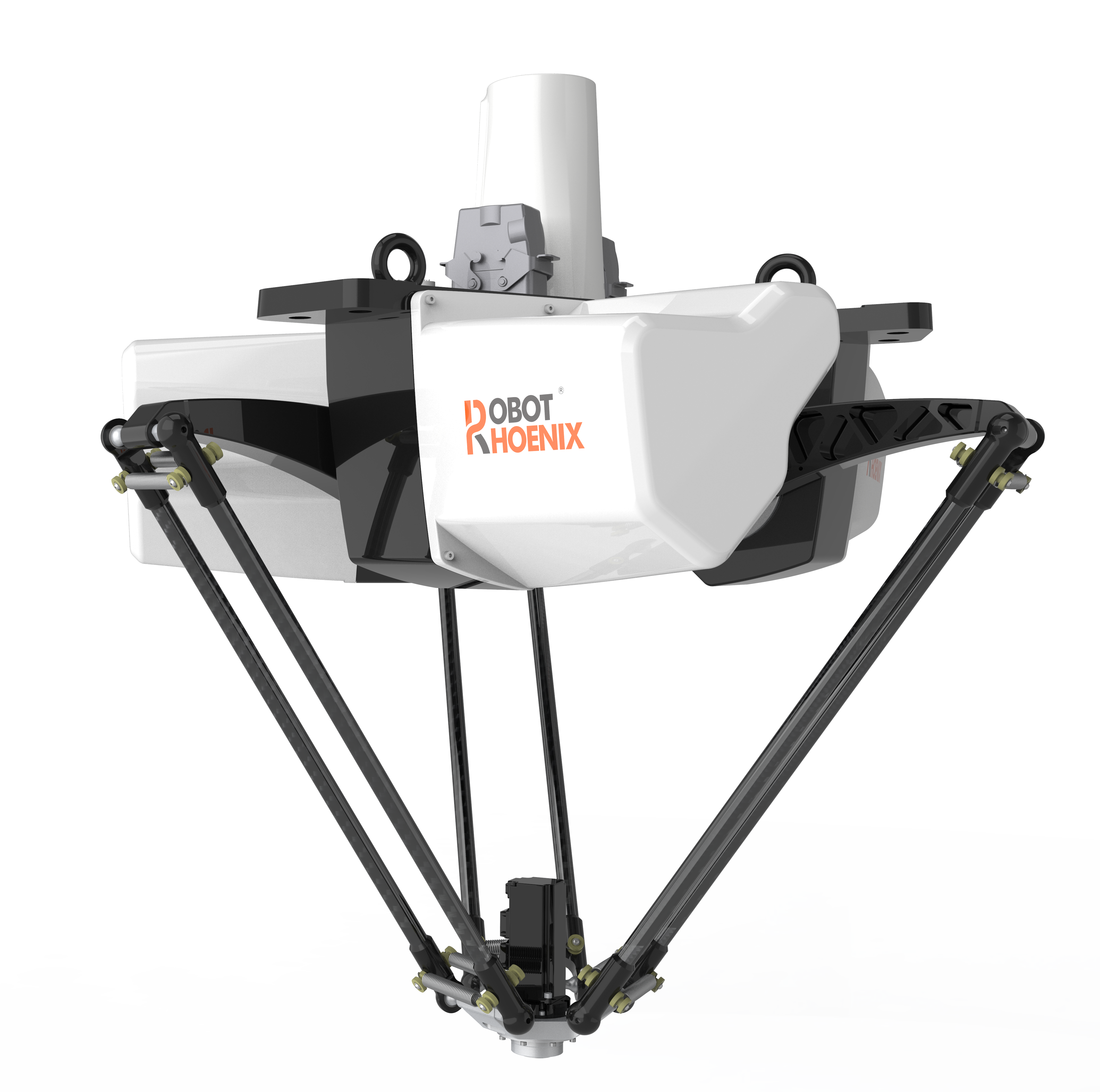
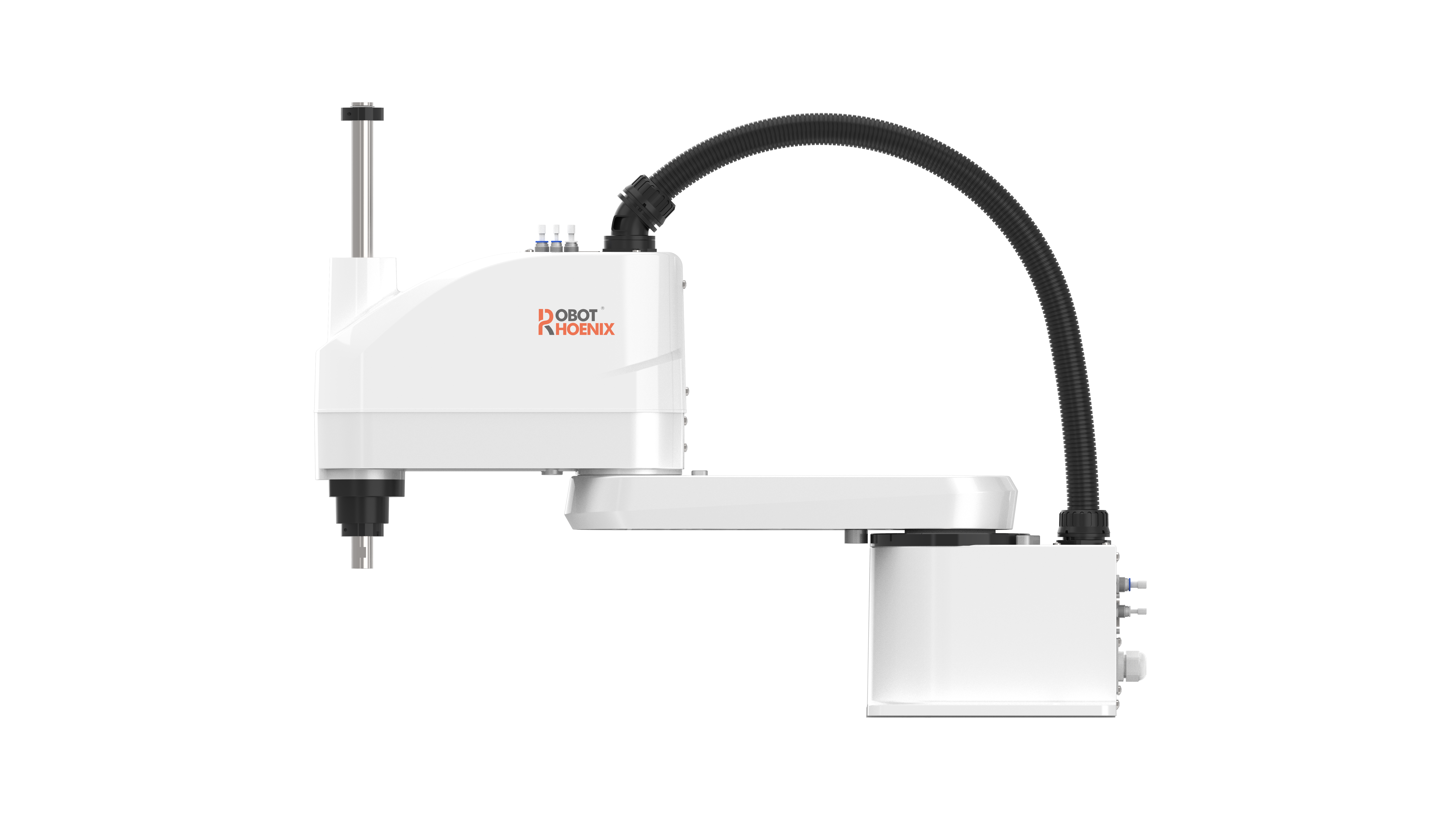
Robotphoenix, founded in 2012 and headquartered in Hangzhou, China, is a manufacturer of Delta robots, SCARA robots, and complete automation packaging systems. Its robots support sorting and packing processes in food, daily chemicals, pharmaceutical, and electronics industries. The company’s certificate list includes both robot families, which is useful for a buyer because it avoids the question of whether a certificate actually covers the chosen model.
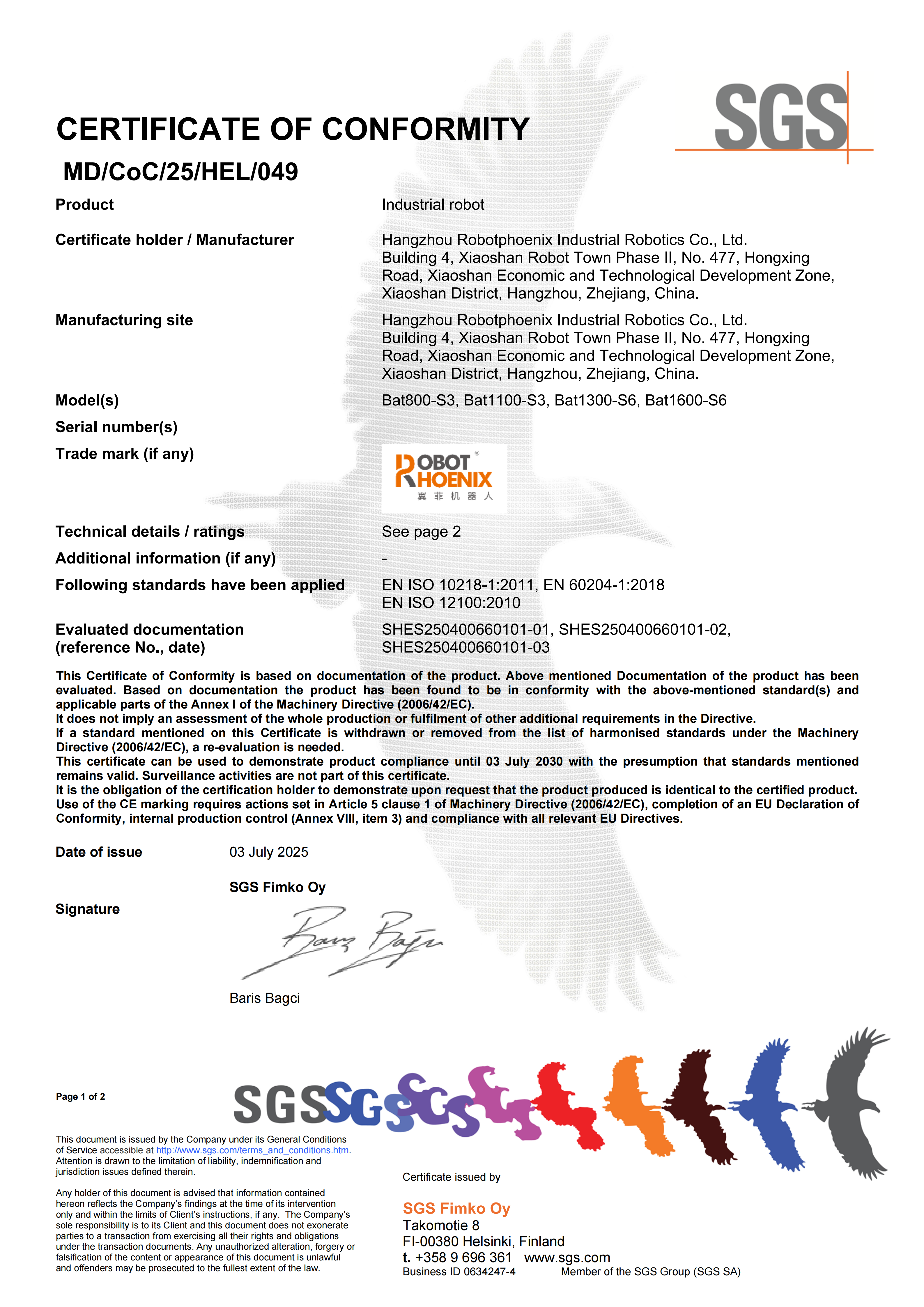
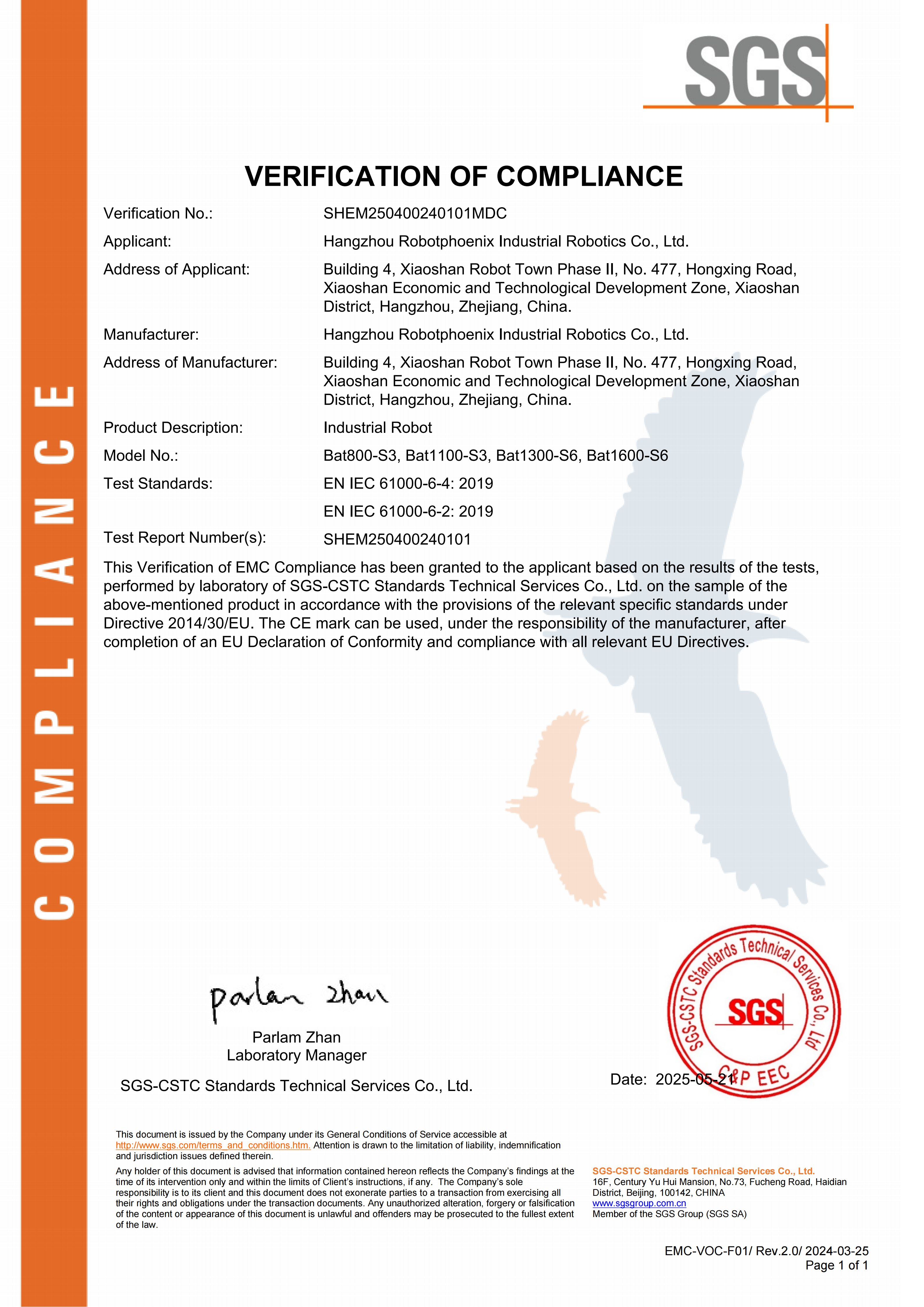
For parallel robots (Delta robots), Robotphoenix holds:
- CE Machinery Directive conformity certificate
- CE-EMC electromagnetic compatibility certificate
- RoHS certificate
For SCARA robots, Robotphoenix holds:
- CE Machinery Directive conformity certificate
- CE-EMC electromagnetic compatibility certificate
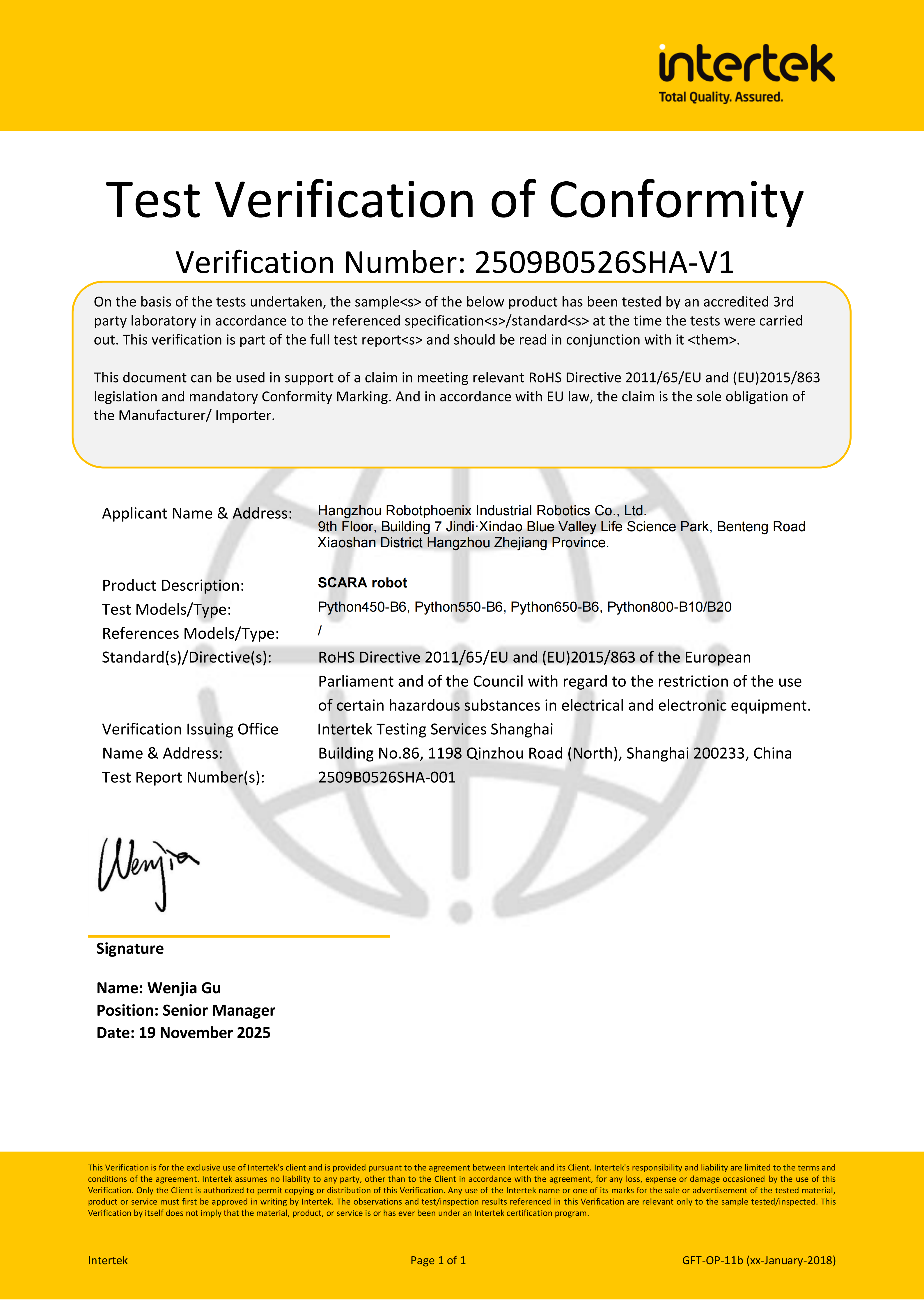
- RoHS certificate
In addition, the robot range is certified against ISO10218-1, meets REACH requirements, and is qualified to ISO Class 4 cleanroom conditions. The company also holds three management system certificates: a quality management system (QMS), an environmental management system (EMS), and an occupational health and safety management system (OHSMS).
Step-by-Step Certification Verification Checklist
Use the following process when auditing any Delta or SCARA robot supplier.
- Define the commercial destination and application. If the final market is the EU, CE Machinery and CE-EMC are the first check. If the robot will run in a cleanroom, require ISO Class evidence.
- Ask for the Declaration of Conformity. A CE mark on the nameplate is not enough. The declaration should identify the manufacturer, the robot model, and the directives that have been applied.
- Verify that the certificate names the correct robot family. A parallel robot and a SCARA robot have different designs and should have separate certificates, as seen in Robotphoenix’s document set.
- Check the standard or directive references on the certificate. For industrial robots, ISO10218-1 should appear; for electrical equipment, EMC references are expected.
- Request RoHS and REACH statements. In the EU, these are legal obligations for electrical equipment and chemical substances. Buyers should keep them on file for downstream audits.
- Confirm cleanroom or industry-specific classification if needed. An ISO Class 4 cleanroom claim should be supported by a valid classification test.
- Review management system certificates to gauge process maturity. QMS, EMS, and OHSMS certificates indicate that the supplier manages quality, environmental impact, and worker safety in a systematic way.
- Keep the document package aligned with the concrete order. Check that the model series in the certificate matches the robot model quoted in the purchase contract.
Certification Comparison Table
The table below summarizes the documents buyers should collect for Delta and SCARA robots.
| Document | Typical Scope | Why a Buyer Should Check It |
|---|---|---|
| CE Machinery Conformity | Machine safety, guarding, and control system requirements | Required for placing industrial machinery on the EU market |
| CE-EMC Documentation | Electromagnetic emissions and immunity | Confirms that electronics will not disrupt or be disrupted by other equipment |
| ISO10218-1 Safety Compliance | Safety requirements for industrial robot design and manufacture | Widely used by integrators and end users to evaluate robot safety |
| RoHS Certificate | Restriction of hazardous substances in electrical equipment | Often required for legal sale in EU and other regulated markets |
| REACH Statement | Chemical safety for substances in manufactured articles | Supports compliance with EU chemical regulations |
| ISO Class 4 Cleanroom Classification | Air cleanliness in controlled environments | Relevant for pharmaceutical and certain food packaging applications |
| QMS, EMS, OHSMS Certificates | Quality, environmental, and occupational health and safety management systems | Indicates systematic process control and lower supplier risk |
How Certification Needs Vary by Application
Different industries create different certification priorities. In food packaging, high-speed Delta robots are often used for sorting and packing. Buyers in this segment typically request material compliance documents and valid robot certification because packaging lines run continuously and often operate under food safety audits. In pharmaceutical production, documentation is part of validation. An ISO Class 4 cleanroom classification can help a robot supplier qualify for sensitive filling or primary packaging processes. In daily chemicals, robots may be integrated into complete packing systems; buyers frequently need CE for the full system and RoHS/REACH documentation for the robot components. In electronics, SCARA robots are used for assembly and pick-and-place. Since electronics environments are sensitive to interference, CE-EMC documentation becomes an important data point. In all cases, the buyer should ask for the same evidence regardless of the robot brand, and then compare responses.
Frequently Asked Questions
Which certifications are required for importing and operating an industrial robot?
For most international markets, the most frequently required documents are CE conformity (Machinery and EMC), ISO10218-1 robot safety evidence, RoHS, and REACH. If the robot is used in a cleanroom-controlled pharmaceutical or food process, an ISO Class classification may also be required. Robotphoenix provides CE, CE-EMC, RoHS, ISO10218-1, REACH, and ISO Class 4 documents for its Delta and SCARA robot families.
Can a Delta robot and a SCARA robot be certified separately?
Yes. Certification applies to a machine design or series. Robotphoenix has separate CE Machinery certificates for parallel robots and SCARA robots, separate CE-EMC certificates for parallel robots and SCARA robots, and separate RoHS certificates for parallel robots and SCARA robots. This separation lets buyers know exactly which robot family the document refers to.
Do certified robots cost more, and how should buyers budget?
Compliance testing and documentation are part of the manufacturing cost. Prices vary by robot model, payload, reach, controller options, and level of integration. Buyers should treat certification as a qualification requirement, not an optional add-on. When comparing quotes, ask each supplier to list which certificates are included and which robot models they cover.
Can I see a sample certificate before ordering?
Yes, a supplier should share sample certificates before you commit. Robotphoenix can provide certificate examples for its Delta and SCARA robot families through the sales team. You can contact ran.chen@robotphoenix.com or WhatsApp +66 92 627 2873 to request them.
How long does it take to receive the full compliance document package?
The compliance package is normally prepared with the robot delivery. If the buyer needs the documents for a project review, customs, or an end-customer audit before shipment, the supplier should confirm timing during quotation. For Robotphoenix, state the required deadline during your inquiry so the team can schedule the document package accordingly.
Conclusion
Certification is not a formality; it is the interface between machine design and market access. This guide has outlined the main industrial robot certifications, explained why each one matters, and shown how Robotphoenix documents compliance for its Delta and SCARA robot families. Procurement teams can use the checklist above to compare suppliers systematically. The next step is simple: ask for a sample certificate package and a quote.
Robotphoenix helps buyers verify compliance before purchase. For a sample certificate package, a quote, or questions about your specific market, contact ran.chen@robotphoenix.com or WhatsApp +66 92 627 2873. More product information is available at https://www.rprobotic.com/.