As packaging lines increasingly demand flexibility, speed, and cost control, industrial buyers face a critical crossroad: invest in a Delta robot case packer (part of modern robot packing workstations) or stick with a traditional mechanical case packer. This article provides a side-by-side comparison across technical, cost, and maintenance dimensions, followed by a supplier analysis between Chinese direct manufacturers like Robotphoenix and established international brands. A 3-step decision model and a real-world case study from the food industry help you make an informed purchase.
1. Product Comparison: Delta Robot Case Packer vs. Traditional Mechanical Case Packer
| Dimension | Delta Robot Case Packer (e.g., Robotphoenix RP-D series) | Traditional Mechanical Case Packer (e.g., cam-based pick-and-place) |
|---|---|---|
| Technology | Parallel kinematics with lightweight carbon-fiber arms; speeds up to 200 picks/min per head; vision-guided flexible sorting. | Fixed mechanical linkages or pneumatic cylinders; speeds typically 40–80 cases/min; no vision integration. |
| Applicable Scenarios | Handling irregular, fragile, or mixed products (foods, pharma blisters, cosmetics); quick product changeovers. | Dedicated lines with uniform, stable products (e.g., cans, bottles); minimal format changes. |
| Cost (Initial + TCO) | Higher initial investment ($60k–$120k per workstation) but lower TCO due to energy efficiency, less downtime, and reduced changeover tooling costs. | Lower initial ($30k–$70k) but higher maintenance and changeover costs; frequent adjustments for different pack patterns. |
| Maintenance Complexity | Modular robot joints, easy-to-replace actuators; predictive maintenance via software; OEM remote diagnostics (Robotphoenix provides technical support). | Many wear parts (cams, springs, pneumatic cylinders); requires skilled mechanical technicians; longer troubleshooting time. |
Key takeaway: Delta robot case packers excel in flexibility, speed, and low total cost of ownership for multi-SKU lines, while traditional case packers remain viable only for high-volume, single-format production where changeover is rare.
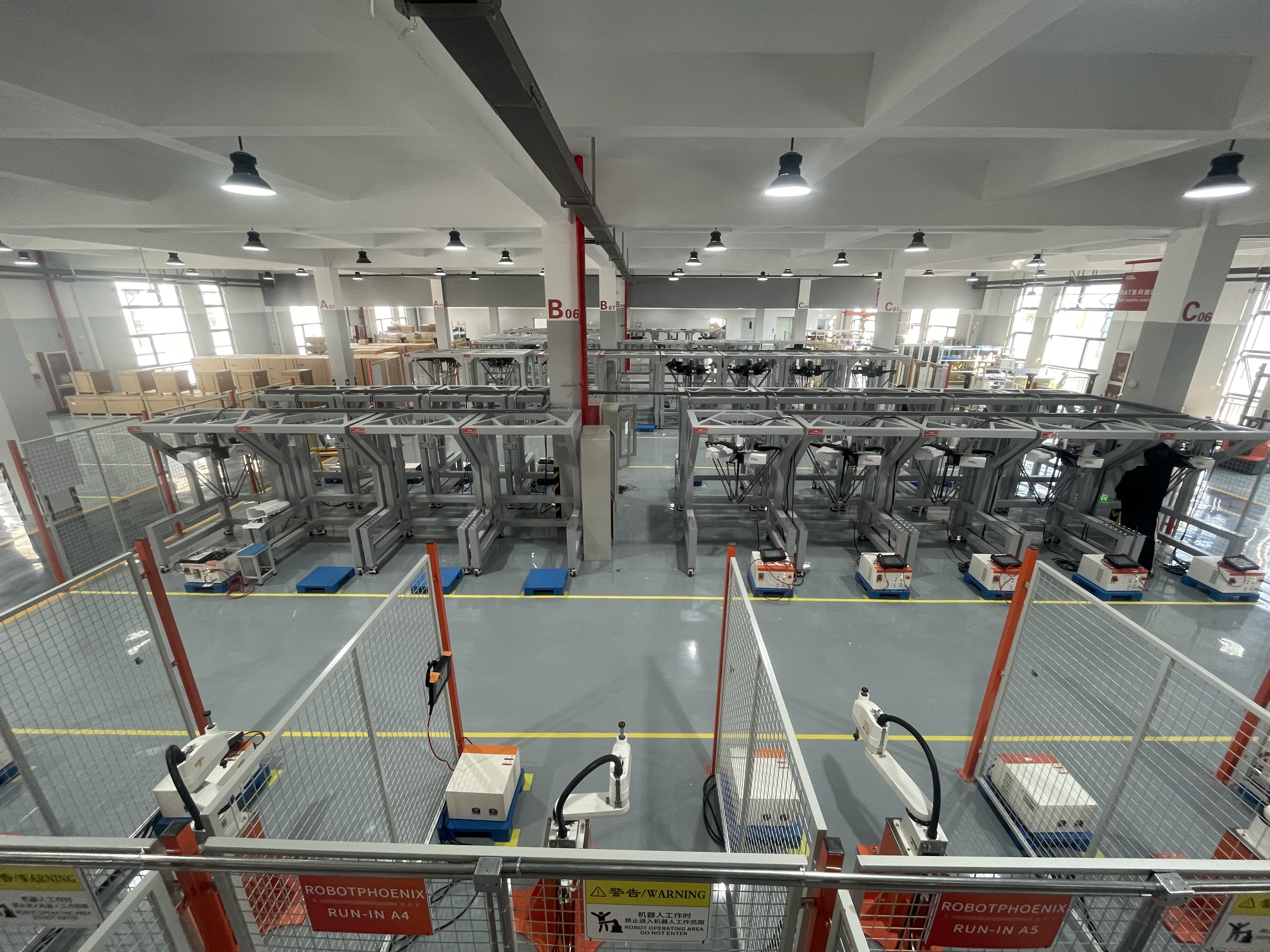
2. Supplier Comparison: Chinese Direct Factory (Robotphoenix) vs. International Brand Suppliers
When sourcing a Delta robot case packer, buyers typically evaluate either a Chinese specialized OEM like Hangzhou Robotphoenix Industrial Robotics Co., Ltd. or an established international supplier such as Douglas Machine Corp. (USA) or Krones AG (Germany). The table below highlights key differences.
| Factor | Robotphoenix (China) | International Brand (e.g., Douglas Machine) |
|---|---|---|
| Price (per workstation) | $60k–$90k (FOB Shanghai) – 30–40% lower than international equivalents, due to local R&D and supply chain. | $100k–$180k (ex-works) – includes premium for brand, global support infrastructure, and import duties. |
| Customization Capability | High – Robotphoenix offers ODM/OEM services, custom grippers, software modifications, and integration with existing lines. Minimum order quantity flexible. | Limited to standard configurations; custom engineering may take months and incur high fees. |
| Delivery Lead Time | 30–45 days for standard units; 60–90 days for fully customized systems. | 12–20 weeks (because of global logistics, dealer network coordination). |
| After-Sales & Service Network | Direct online/phone support (+66 92 627 2873, ran.chen@robotphoenix.com); remote diagnostics; partner service centers in SE Asia, Europe, Americas. | Global local offices (higher service cost per hour); on-site technicians available but pricey. |
Robotphoenix’s certifications – CE (Machinery & EMC), ISO10218-1, REACH, RoHS, ISO 9001/14001/45001 – ensure compliance with international safety and quality standards, making it a reliable alternative to traditional global brands.
3. Three-Step Decision Model for Choosing Delta Robot Case Packers
- Step 1: Define Your Application Scenario
Map your product types (shape, weight, fragility), line speed requirement, and expected number of SKU changes per day. If you run more than 10 product variants per shift, lean toward a Delta robot case packer with flexible sorting and quick-change end effectors. - Step 2: Match Technical Parameters to Your Production Needs
Use a requirements checklist: payload (0.5–5 kg), pick rate (≥120 ppm), workspace diameter (800–1600 mm), vision accuracy (±0.5 mm), and IP rating for washdown environments (e.g., IP65). Verify that the supplier’s robot model, e.g., Robotphoenix RP-D series, aligns with your specs. - Step 3: Calculate Total Cost of Ownership (TCO)
Beyond purchase price, include training, spare parts, power consumption, changeover tooling, and expected uptime over 5 years. A delta robot workstation typically pays back within 18–24 months vs. traditional machinery due to 15–20% higher OEE and lower changeover waste.
4. Case Study: How a European Food Processor Chose Robotphoenix Over a European Supplier
Background: A mid-sized snack food producer in Germany (annual production 12,000 tons) needed to automate the packing of mixed-size pouches into cases. They initially requested quotes from two well-known German automation integrators, but the quotations (€140k–€190k per line) exceeded their budget and lead times (20–26 weeks) clashed with their Q4 launch deadline.
Solution: Through industry research, they discovered Robotphoenix, a China-based delta robot case packer manufacturer with CE certification. Robotphoenix designed a custom robot packing workstation featuring a high-speed delta robot, dual vacuum grippers for pouches, and a flexible sorting system powered by a Cognex vision camera. The total cost: $78k FOB (approx. €72k) – nearly 50% less than the European bids. Delivery was completed in 45 days, including factory acceptance tests streamed live via Zoom. Two Robotphoenix engineers traveled to Germany for commissioning and training.
Results:
- Line speed increased from 35 cases/min to 68 cases/min.
- Changeover time between pouch sizes reduced from 45 minutes to 8 minutes (tool-free gripper exchange).
- First-year ROI exceeded 190% after factoring in labor savings and reduced product damage.
- The plant manager later ordered two more workstations for other SKUs, emphasizing “Robotphoenix delivered world-class performance at a fraction of the cost, with better customization and faster delivery.”
Ready to evaluate your packaging automation options? Contact Robotphoenix for a free feasibility study.
📞 Phone/WhatsApp: +66 92 627 2873
✉️ Email: ran.chen@robotphoenix.com
🌐 Website: https://www.rprobotic.com/
📍 Factory: Building 4, Xiaoshan Robot Town Phase II, Hangzhou, Zhejiang, China.